Assistance for Landowners with Chokecherry Trees
Are you a landowner looking to get rid of your chokecherry trees? Here is a collection of resources to get you started. Learn about how to properly treat and remove Chokecherry Trees and learn about what varieties you can plant to replace them.
Cutting is Not Recommended
Herbicides
How to Treat
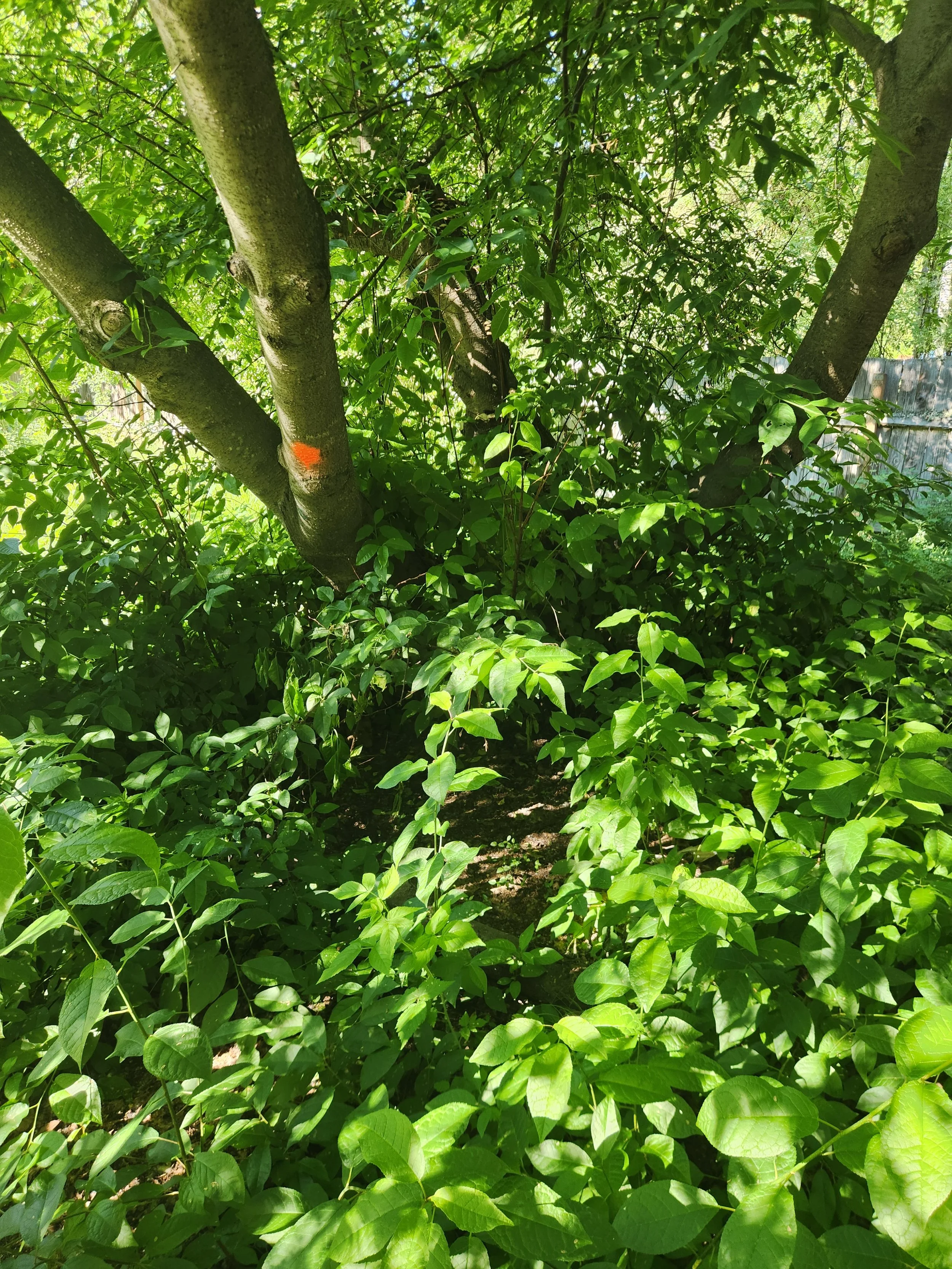
Just cutting the tree down will not kill it because it will regenerate from the remaining trunk, root crown, and lateral roots. Application of herbicide is necessary for trees that cannot fully be removed by pulling or digging. Small trees may be pulled or dug out, but extreme care must be taken to pull any new sprouts that might arise from fragments left behind.
Unless you are dealing with small trees, e.g. less than 3", pulling is not recommended. If smaller than 3" in basal diameter, a weed wrench can be used to pry out the roots. Care must be taken to remove root fragments or they will create new sprouts.
Pulling
Herbicides used in residential areas are primarily those with the active ingredient glyphosate, triclopyr, and /or 2,4-D. There are two methods of herbicide treatments that we will be conducting, both of which prevent the damage of non-target vegetation. You can choose which method you would prefer us to use. They are cut stump or lance (see right).
Cut Stump
Cut stump applications involve cutting the tree down and immediately applying a more concentrated herbicide solution directly to the cut surface. The application must be made within 30 minutes of cutting because the tree will seal off the wound, preventing the uptake of herbicide.The cut portions of the tree (branches etc) should be disposed of to prevent re-sprouting. The active ingredient in the herbicide used is triclopyr or glyphosate.
Lance Injection
Injection of herbicides can be made directly to the trunk of the tree using specialized equipment. The equipment, called an EZ Ject lance, propels a capsule containing herbicide into the cambium layer of the tree where it is absorbed. Injections, though expensive, are observed to be effective and selective, only causing damage to the treated trees. The active ingredient in the herbicide shells is glyphosate.
Tree Companies
Looking to have your Chokecherry Tree cut down to be treated or has it been treated and you are looking to remove it? Here is a list of local tree removal companies you can contact:
Great Alaska Tree Co..................907-978-4702
Top Notch Tree Removal LLC....907-519-8255
Fairbanks Stump Grinders........907-457-8867
Arctic Apes Tree Services..........916-217-4598
Dave’s Killer Trees.........................907-322-233
Black Hawk Works.........................907-347-1936
Sherpa Tree Services..................907-687-0845
Bambam tree Removal...............406-425-1504
J & E Trees.....................................907-479-4167
G’s Groundskeeping....................907-750-9394
Weber Stump grinding.............907-456-8041
Tree Service by Erik...................778-504-7209
Grizzly Tree Service......................775-777-5700
Fairbanks Tree Service..............907-802-4505
Happy Tree Service...................907-348-3567
Planting Alternatives
In place of Chokecherry Trees here are some varieties you can plant:
Balsam Poplar
Siberian Mountain Ash
Native Saskatoon
Prairiefire Crabapple
Thunderchild Crabapple
Princess Kay Plum
Carmine Jewel Cherries
These can all be locally sourced at the various nurseries in the Fairbanks/North Pole area.
FSWCD has its annual Tree & Shrub Sale every May. For more information click here
Resources
Interested in learning more about how to treat Chokecherry Trees? Read this publication from UAF Cooperative Extension Service